AI Isn't Just a Tool: It's Redefining Software Development's Core
Recent substantial investments in AI-powered software testing and development platforms signal a critical industry shift, making AI central to accelerating development cycles and ensuring quality.
AI-generated image
Is AI merely a helpful assistant in our integrated development environments, or has it become truly indispensable for the future of software development? The recent surge in investments and product developments in AI-powered testing and development tools strongly suggests the latter, marking a pivotal moment where AI moves beyond augmentation to become a core, foundational element of the entire software lifecycle.
In the last few days alone, we've seen substantial commitment to this vision. Meticulous, an autonomous software testing platform, secured $15 million in Series A funding to expand its offerings, a move directly spurred by the accelerating pace of code generation from AI tools, as Pulse 2.0 reports. Meanwhile, UiPath has been recognized as a leader in delivering AI software testing, with its Test Cloud leveraging AI agents across diverse applications. These developments underscore a clear trend: AI isn't just optimizing existing processes; it's reshaping the very structure of how we build and validate software.
The Shifting Bottleneck: From Code Generation to Quality Assurance
For years, the bottleneck in software development often resided in the sheer time and effort required for writing code. AI coding tools have dramatically alleviated this, enabling developers to generate code at unprecedented speeds. However, this velocity creates a new challenge: the rate at which code can be thoroughly tested and reviewed. Meticulous's recent funding round directly addresses this issue, expanding a platform designed to tackle the growing bottleneck in AI-assisted development. Their autonomous testing system creates and maintains thousands of user flows, covering edge cases across vast codebases, and can detect subtle changes, even single-pixel differences, before code ships to production. This capability ensures that while AI agents generate code quickly, quality remains paramount, illustrating a critical shift in where development teams must focus their resources.
This isn't just about faster bug detection; it's about making the entire quality assurance process more intelligent and proactive. The platform offers engineers, product managers, and designers visibility into proposed changes, and critically, it allows AI coding agents to iterate on their own work before human review. As an executive at Meticulous highlights, "code review and the feedback loop become the bottleneck." Tools like Meticulous transform this bottleneck from a manual slog into an AI-augmented feedback loop, ensuring that higher-velocity code generation doesn't compromise stability.
Agentic AI: The Rise of Autonomous Development and the "Finance Engineer" Parallel
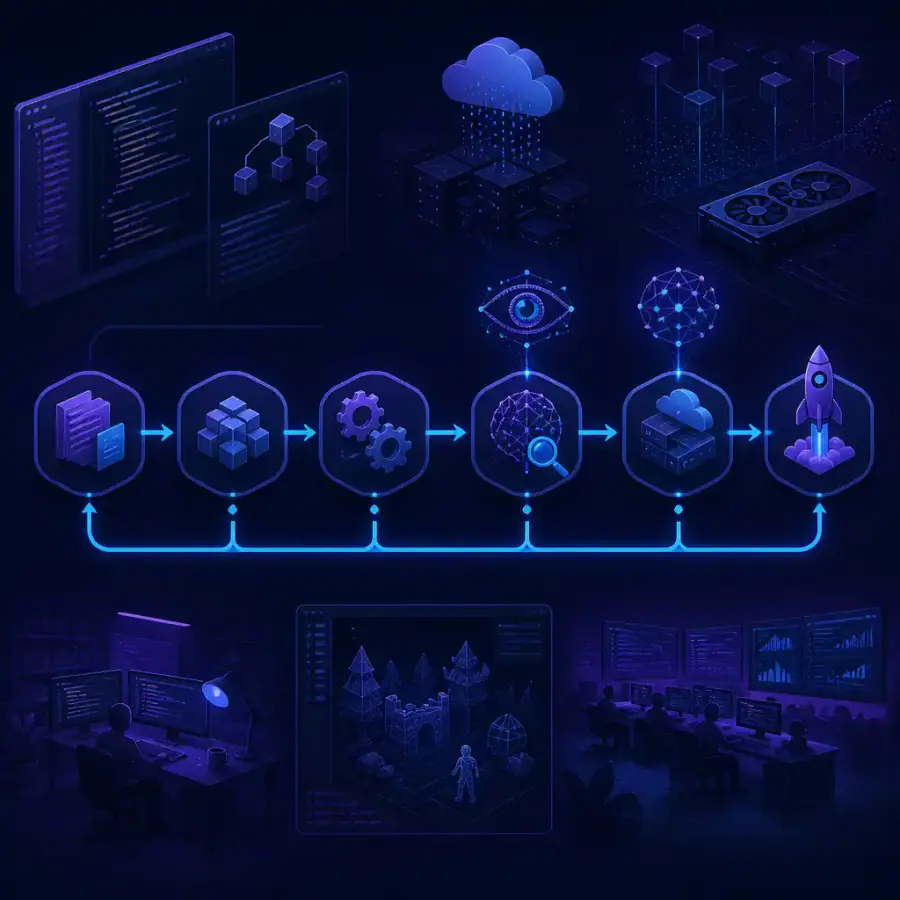
The discussion around AI in software development is increasingly centered on "agentic" systems – AI that doesn't just assist but takes autonomous action within defined parameters. Companies like Tricentis, named a leader in "Agentic Software Quality Assurance Platforms," and Zurich-based Klarent, which recently raised €7.13 million for its own agentic testing platform, are at the forefront of this shift. These agentic AIs are not mere scripts; they are designed to make decisions and execute tasks across the testing spectrum.
Beyond testing, the implications for the broader development lifecycle are profound. GitLab, for instance, has expanded its governed software factory with new AI-driven Duo Agent flows. These agents, integrated within a DevSecOps platform, offer capabilities like Impact Analytics to help large customers attribute AI-assisted work to real shipping outcomes and manage compute spend. This is not just about isolated tools but about AI agents becoming integral to enterprise workflows, supporting cleaner expansion within existing customers and countering competitive pressures.
The transformative effect of AI on roles and workflows extends beyond traditional engineering. As Andreessen Horowitz recently highlighted, AI is fostering the rise of the "finance engineer," individuals who combine domain expertise with the ability to build custom AI tools and automations. This parallel is instructive: just as finance professionals are becoming builders of AI-powered financial systems, developers and QA professionals are evolving to design, oversee, and optimize agentic AI systems that drive software delivery. This shift means focusing on the architecture and orchestration of these agents, rather than purely manual execution, making the finance engineer a compelling analogy for the evolving software development role.
Market Trajectory: Investment as a Bellwether for Indispensability
The financial commitment to AI in software testing is a clear indicator of its perceived value and future indispensability. The AI Powered Software Testing Tool Market, valued at USD 2.8 billion in 2026, is projected to surge to USD 15.1 billion by 2036, growing at a compound annual growth rate (CAGR) of 18.4% according to Future Market Insights. Such aggressive growth forecasts are not built on hype alone but on the demonstrable value AI brings to the table: increased efficiency, reduced costs, and enhanced quality.
While members of the Forbes Technology Council wisely advise leaders to "pressure-test" emerging tech trends like agentic AI, the scale of investment into companies like Meticulous, Klarent, and platforms from established players like GitLab and UiPath suggests that this particular trend is passing scrutiny. The key question, as one Forbes contributor articulated, is whether a technology addresses a real, durable need. In the context of ever-increasing software complexity and the demand for faster delivery, AI-powered testing and development tools are clearly answering that call, not simply introducing more complexity.
Ultimately, the data paints a clear picture: AI is no longer a luxury or an experimental feature in software development. It is rapidly becoming an indispensable component, redefining roles, accelerating cycles, and ensuring quality at a scale previously unimaginable. For developers and engineering leaders, understanding and integrating these agentic and AI-augmented systems is no longer optional; it is essential for staying competitive and delivering exceptional software in the coming years.
No topics yet: start the first one.
More stories
OpenAI's Revenue Recalibration: A Crucial Lesson in AI Valuation
Recent reports of OpenAI's annualized revenue, while clarified as an accounting distinction rather than a demand shortfall, expose the market's hypersensitivity and concentrated risk within the burgeoning AI sector.

Google Foresight: A Pivotal Move to On-Device AI for Productivity
Google's experimental AI Edge Foresight for Mac, offering truly offline meeting transcription and a personal knowledge base, marks a significant shift towards privacy-centric, on-device AI solutions that could redefine developer tools.

Google's Free AI Agent Courses: A New Era for Developers
Google is democratizing access to crucial AI agent development skills with extensive free courses, signaling a pivotal shift where autonomous bots become core to software engineering.

OpenAI's Math Proofs: A "Demonstration of Power" Eroding Intellectual Foundations
OpenAI's deluge of AI-generated mathematical proofs has sparked outrage among mathematicians, revealing a deeper threat to the collaborative, human-centered foundations of intellectual discovery.