Python 3.15: A Pivotal Release for Performance and Developer Experience
Python 3.15 is more than just an incremental update; its experimental JIT compiler delivers crucial performance gains, while lazy imports and default UTF-8 simplify modern development workflows and address long-standing pain points.
AI-generated image
Python continues its reign as a dominant force in software development, from web services to artificial intelligence. Yet, with its widespread adoption, concerns about execution speed and application startup times have grown more pressing. Can Python truly keep pace with the demands of modern, large-scale systems? Python 3.15, released on October 9, 2026, unequivocally answers with a resounding yes, delivering significant advancements that directly target these critical areas.
This annual feature release introduces a suite of changes across the language and its standard library. While many improvements contribute to overall stability and correctness, it is the substantial upgrade to the experimental JIT compiler, the introduction of explicit lazy imports, and the crucial shift to UTF-8 as the default encoding that mark Python 3.15 as a particularly impactful update. These features collectively aim to make Python faster, more efficient, and more aligned with contemporary development practices.
The Performance Leap: JIT Takes Center Stage
For years, discussions about Python's performance often led to external solutions like PyPy. However, with Python 3.15, the core CPython interpreter is making strides with its significantly upgraded experimental JIT compiler. While the JIT debuted in Python 3.13, its initial revisions were primarily foundational. This latest iteration, however, is where we begin to see tangible results.
Benchmarks indicate a notable improvement: the JIT is now demonstrating an 8% to 13% geometric mean performance gain over standard CPython, a figure that varies depending on the specific platform and workload, as InfoWorld reports. For more specific workloads, such as Fibonacci calculations and bubble sort algorithms, one benchmark observed a 1.20x to 1.28x speed gain over the regular interpreter in those tests, as detailed by blog.miguelgrinberg.com. These are not minor tweaks; they represent a meaningful step towards making Python applications inherently faster without requiring developers to refactor their code or switch runtimes.
The improvements stem from a new tracing front end, better machine code generation, register allocation, and optimized reference count elimination for certain object classes. While still experimental, the JIT's progress is a testament to the Python core development team's commitment to speed. Its long-term goal to eventually be enabled by default signals a future where Python's performance is less of a concern and more of a given.
Streamlining Development: Lazy Imports and Default UTF-8
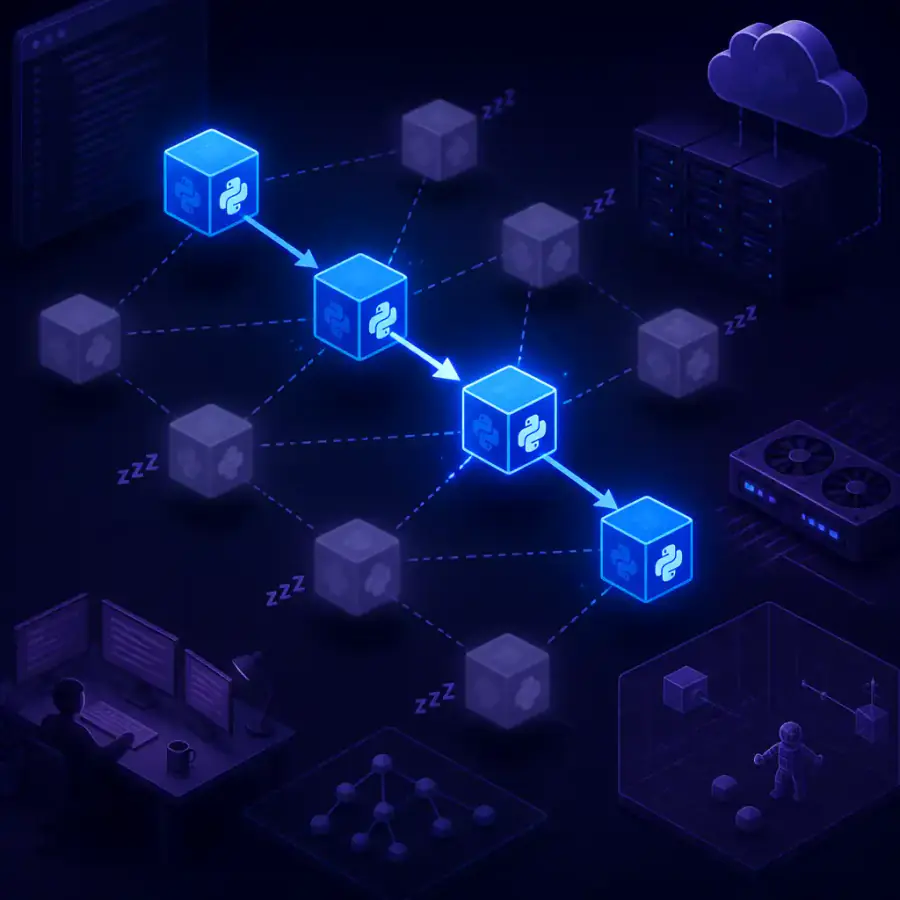
Beyond raw execution speed, Python 3.15 tackles critical quality-of-life issues that directly impact developer productivity and application responsiveness. The introduction of lazy imports is a game-changer for large applications. Python's import system, while robust, can lead to slow startup times for applications with deep dependency trees, as modules are located, compiled, and executed at the top level, even if their contents are never used in a particular run.
The new lazy soft keyword allows developers to defer the actual loading of a module until its imported name is first accessed. This means developers can declare all their imports at the top of a file for readability, but only incur the loading cost for modules that are actually utilized during runtime. This feature not only significantly reduces application startup latency but also encourages cleaner code architecture, eliminating the need for scattered conditional imports or complex restructuring. For existing codebases, the option to enable lazy imports globally via a command-line flag or environment variable further eases adoption.
Equally impactful, though perhaps less immediately flashy, is the change to UTF-8 as the default encoding. This move aligns Python with modern web and system standards, significantly reducing the prevalence of encoding-related errors that have plagued developers for years. This fundamental shift simplifies file I/O and string manipulation, making Python more predictable and robust in a globalized computing environment. It's the kind of default that, once implemented, makes you wonder how we ever managed without it.
Beyond the Headlines: Smart Defaults and Powerful Tools
Python 3.15 also delivers a host of other refinements that enhance developer experience. The new frozendict builtin offers an immutable, hashable dictionary type, providing a cleaner, safer alternative for scenarios where immutability is crucial. Similarly, the sentinel("NAME") builtin addresses the common pattern of creating unique object instances, offering type-checked, well-represented sentinel values that improve code clarity and debuggability.
For those who routinely work with nested data structures, the enhanced unpacking in comprehensions with * and ** operators simplifies the flattening and combination of lists and dictionaries, leading to more concise and Pythonic code. Furthermore, Python 3.15 introduces a new profiling package, including Tachyon, a high-frequency statistical sampling profiler. This offers a less intrusive way to gather performance insights compared to the traditional cProfile (now profiling.tracing), which can be invaluable for identifying bottlenecks in production environments with minimal performance overhead.
It is also worth noting the pragmatic decision to revert the incremental garbage collector introduced in Python 3.14. Due to reported increases in memory usage, Python 3.15 returns to the older generational collector used in 3.13 and before. This U-turn underscores the development team's commitment to stability and memory efficiency, prioritizing a reliable experience over experimental features that introduce regressions.
Python 3.15 is a crucial release for developers. The experimental JIT compiler's performance gains, combined with the practical benefits of lazy imports and the sensible default of UTF-8 encoding, demonstrate a clear focus on addressing modern development challenges. While the JIT is still experimental, its trajectory is promising, and the immediate benefits of the other features make upgrading a compelling proposition for anyone building or maintaining Python applications. This release is a strong signal that Python is not just evolving, but actively pushing towards a future of greater efficiency and enhanced developer satisfaction.
No topics yet: start the first one.
More stories
Creative Coding: When Algorithms Paint and Compositions Flow
The integration of programming languages into music and visual arts signifies a pivotal shift, elevating code from mere utility to a sophisticated tool for artistic expression and interdisciplinary innovation.