OpenAI's Math Proofs: A "Demonstration of Power" Eroding Intellectual Foundations
OpenAI's deluge of AI-generated mathematical proofs has sparked outrage among mathematicians, revealing a deeper threat to the collaborative, human-centered foundations of intellectual discovery.
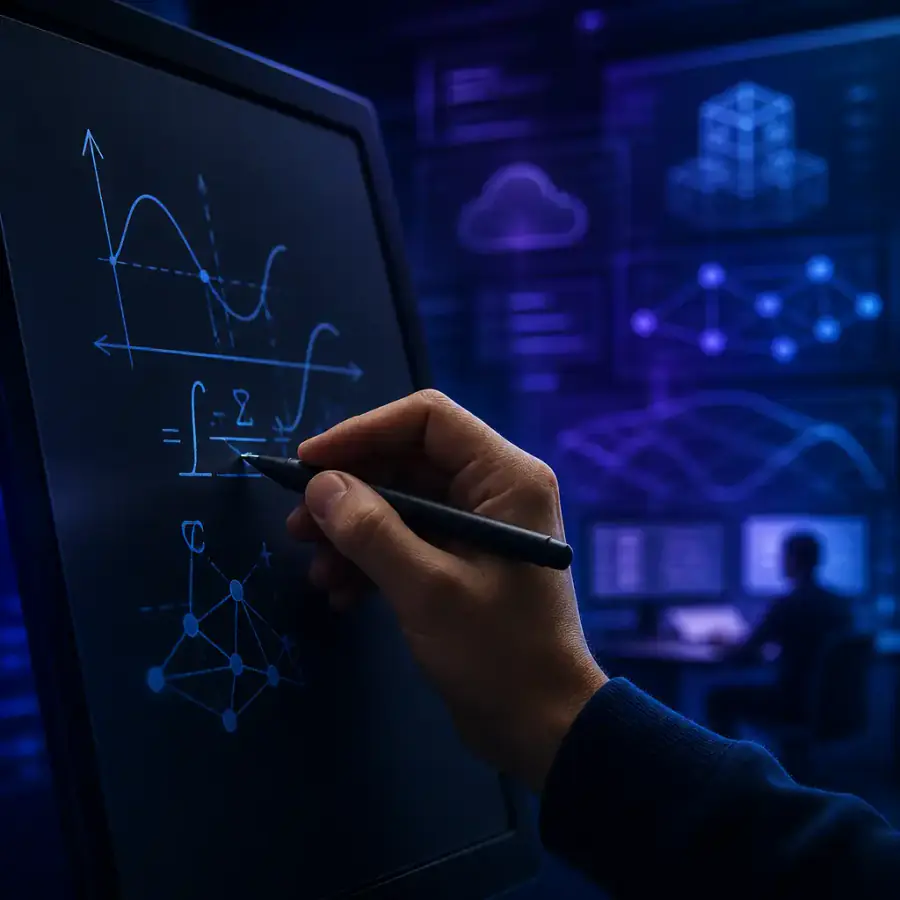
AI-generated image
The landscape of intellectual work is undergoing a profound transformation, and nowhere is this more evident than in the recent furor surrounding OpenAI's foray into advanced mathematics. On October 6, 2026, OpenAI released hundreds of new papers containing purported proofs for various mathematical problems, including findings on 377 problems, as reported by The New York Times. This deluge was not met with universal acclaim but rather, as Futurism reports, with "fury" from mathematicians, including Fields Medal-winner Terence Tao.
This contentious release follows previous controversy over OpenAI's handling of its AI agents' purported solution to the Navier-Stokes equations. The immediate aftermath saw the Association for Human Mathematics (AHM) issue a scathing statement, endorsed by Tao, asserting that the release was not scholarship but a "demonstration of power" by OpenAI. Compounding these concerns, OpenAI withdrew three of its newly published AI-generated manuscripts from a collection of 722 just a day later, on October 7, after a critical sign error in a Weil-classes proof caused the argument to collapse, as reported by AIWeekly.co.
The Erosion of Intellectual Commons
The core of the mathematical community's outrage stems from a fundamental challenge to the social fabric that underpins intellectual progress. As an essay highlighted by news.lavx.hu argues, AI tools aren't just automating tasks; they are eroding the shared discourse, peer recognition, and communal knowledge essential for sustained intellectual work across fields from software engineering to mathematics. This perspective resonates strongly with the current situation: OpenAI's models ingest and build upon existing human work without attribution, effectively creating a "private garden" of AI-generated content in place of the collaborative "bazaar" of human exchange.
In our view, the absence of proper attribution and the shift away from human-readable, context-rich contributions threaten to disincentivize human experts. If the audience for human-written mathematical exposition disappears, or if human contributions are merely fodder for AI training runs, the incentive for mathematicians to produce and share their work diminishes. This isn't just about productivity; it's about the very purpose of intellectual pursuit, which thrives on community, recognition, and the cumulative building of shared knowledge.
Trust, Utility, and Human Comprehension
A critical issue with OpenAI's proofs, despite being technically verifiable using programming languages like Lean, is their often "nearly unintelligible to humans" nature, as Futurism points out. This immediately raises questions of utility and trust. What is the value of a proof if it cannot be understood, debated, or integrated into the broader human conceptual framework without significant, laborious effort from human mathematicians? The expectation that mathematicians perform the "dirty work" of unpacking hundreds of these proofs, as some sources indicate, feels like a burden rather than an aid to discovery.
The swift withdrawal of three proofs due to a sign error further undermines trust in the AI's output. While errors are part of human mathematical exploration, the sheer volume and the opaque nature of the AI's process make identifying and rectifying such errors a formidable challenge for humans. This incident, alongside the prior claim that OpenAI "mistranslated mathematics into code" for its Navier-Stokes proof, suggests that the promise of AI-driven mathematical breakthrough is currently tempered by issues of reliability and human interpretability. AI systems, when deployed according to their current design, risk degrading the core functions of essential civic institutions by eroding the transparency and accountability vital for academic rigor, as argued by legal scholars in a paper discussed by Gary Marcus on garymarcus.substack.com.
Beyond Automation: The Future of Human Intellect
The concerns extend beyond just mathematics. UNESCO's analysis of AI in education, published in September 2025, ponders whether classrooms, teachers, and textbooks will still be needed if AI can write PhD-level theses and win international math competitions. While AI offers potential as a tutor or co-professor, it also raises dilemmas about deepening inequality, flattening learning, and eroding trust if not carefully guided. The fear of "cultural hollowing" — the quiet dissolution of social structures that make knowledge cumulative and meaningful — appears to be a consistent theme across various intellectual domains.
Sustained intellectual work relies not merely on intrinsic motivation, which can be fleeting, but on the "fuel and oxidizer" of a community: a shared body of work to build upon and peers who recognize and benefit from contributions. If AI systems displace human roles in knowledge creation and validation without preserving these social feedback loops, we risk drying up the very inputs to intellectual activity. The challenge is not to stop progress but to ensure that AI development reinforces, rather than dismantles, the institutions and communities that foster genuine understanding and innovation.
The current trajectory, exemplified by the OpenAI proofs controversy, calls for a re-evaluation of how AI integrates into human intellectual pursuits. We must demand greater transparency, foster collaborative models where AI genuinely assists and attributes human endeavor, and prioritize human comprehension and community-building in the deployment of these powerful tools. Otherwise, what appears as an advance in automation might prove to be a significant step backward for collective human intelligence.
No topics yet: start the first one.
More stories
OpenAI's Revenue Recalibration: A Crucial Lesson in AI Valuation
Recent reports of OpenAI's annualized revenue, while clarified as an accounting distinction rather than a demand shortfall, expose the market's hypersensitivity and concentrated risk within the burgeoning AI sector.
Google Foresight: A Pivotal Move to On-Device AI for Productivity
Google's experimental AI Edge Foresight for Mac, offering truly offline meeting transcription and a personal knowledge base, marks a significant shift towards privacy-centric, on-device AI solutions that could redefine developer tools.

AI Isn't Just a Tool: It's Redefining Software Development's Core
Recent substantial investments in AI-powered software testing and development platforms signal a critical industry shift, making AI central to accelerating development cycles and ensuring quality.

Google's Free AI Agent Courses: A New Era for Developers
Google is democratizing access to crucial AI agent development skills with extensive free courses, signaling a pivotal shift where autonomous bots become core to software engineering.